
Grady County Release Date Meaning
A projected release date is a sentence calculation made before the person leaves custody. Oklahoma Department of Corrections materials also call it a PRD or tentative date. It can reflect the sentence, accepted jail credit, earned-credit class, consecutive terms, and legal limits tied to the offense. An actual release date records a completed event. The two dates may match, but they answer different questions. A parole eligibility date is different again. It marks when a case may be considered for parole under the governing law, not the day the prison gate will open.
Custody status must come first. A person awaiting trial at the Grady County Detention Center normally has no computed sentence end date. Bond, a court order, dismissal, another hold, or the final case result controls what happens next. A sentenced county inmate may have a local computation. A person committed to ODOC has a state computation. Leaving the Grady roster for an ODOC institution is a transfer, not release to the community.
Find a Grady County Release Date
Start with the agency that now controls custody. The Grady active roster covers current bookings at the county detention center. Its detail may show a “Schedule Release Date,” but observed released records displayed N/A, and that field is not the jail-register proof of actual discharge. The ODOC offender search covers state custody and state community supervision. It is not the right source for a routine county bond-out.
Use the following order so a missing name is not mistaken for release:
- Identify whether the person is in the Grady jail, an ODOC institution, state supervision, or another custody system.
- For a county booking, compare the active roster with the official “Released Last 72hrs” view and call GCCJA for live status.
- For a state sentence, search by DOC number when possible. With a name, add date of birth and compare all identifiers.
- Check the Grady court docket for the judgment, sentence, amendments, bond order, dismissal, or commitment that drives the custody term.
- Request the agency’s calculation or completed release record when the public screen does not answer the exact question.
The broader search and records path for one named person is available on the Grady County released inmates home page. Keep a note of each source’s time and scope. A local roster and a state record can both be correct when they describe a transfer at different points.
Grady County PRD Confidentiality
ODOC does not promise that its public offender screen will display a precise projected release date. Its official FAQ says an exact inmate release date is confidential unless there is a legitimate judicial or law-enforcement need. The inmate receives the number of days remaining at month-end, may ask a correctional records officer or case manager to explain the calculation, and may then share the date. Victims with release concerns can use ODOC Victim Services through the contact published on that official page.
The ODOC Offender Information page is the controlling public explanation. The captured page below shows the official route and the warning that a date is tentative.
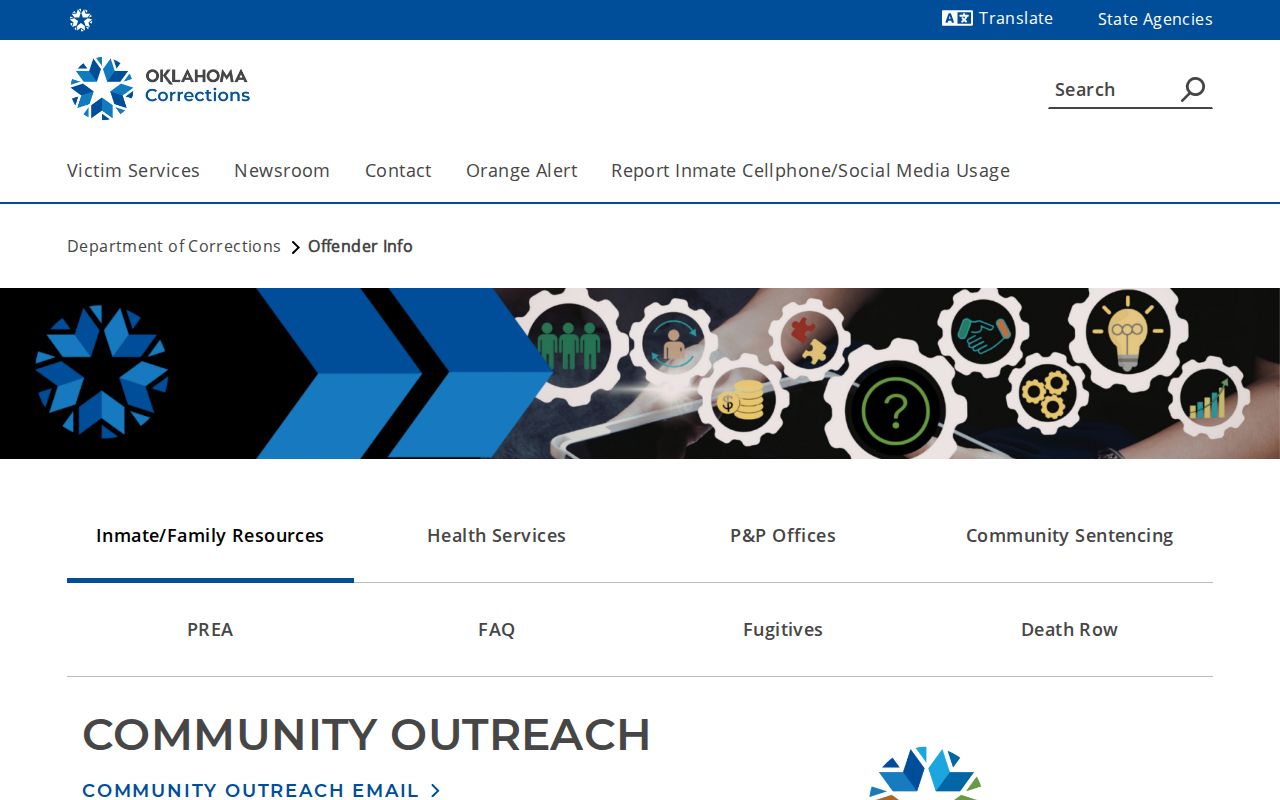
This means a public search result should be read only for the fields actually shown. Do not relabel “last move date” as release date. Do not infer PRD from an inactive status. When the public record is too brief, the proper response is an official records route or direct communication from the inmate, not a hand-built estimate.
Note: ODOC calls the date tentative because credit level, misconduct, and achievement credits can change the time remaining.
Grady County Release Date Sources
State and county sentences are computed by different authorities. ODOC class-credit tables apply to eligible state inmates and certain people sentenced to ODOC who await reception in a county jail, subject to statutory exceptions. They are not a safe shortcut for a sentence served only in Grady County custody. No Grady-specific jail good-time policy was found in the official source sweep.
| Custody situation | Best date source | What not to assume |
|---|---|---|
| Pretrial Grady detainee | GCCJA live status and the Grady court order | No fixed date exists merely because bond is listed |
| Grady county-jail sentence | GCCJA sentence computation, accepted jail credit, and court judgment | ODOC class credits do not automatically apply |
| ODOC state sentence | ODOC records officer, status history, sentence records, and official forms | The public lookup may not show a precise PRD |
| Parole case | PPB action followed by ODOC post-event status | A docket date or favorable vote is not physical release |
For the county path, call the Grady County Detention Center at 405-222-1000 and ask for the sentence computation, jail credit, and actual release order. GCCJA’s posted lobby hours are not a release schedule. The facility publishes no daily release hour, weekend processing rule, or local credit formula. For the legal basis, compare the jail response with the judgment in the Grady court file.
Oklahoma Credits Change Release Dates
Under 57 O.S. §138, one earned credit equals one day for an eligible state inmate. Credits accrue by classification level. For the statutory group with a prior listed adult, youthful-offender, or juvenile felony, the monthly levels are 0, 22, 33, and 44. For people without such a listed prior, the levels are 0, 22, 45, and 60. These are monthly credit schedules, not percentages taken off every sentence. Classification is reviewed from time to time, and the person’s actual placement and legal limits matter.
Credits may be removed after the disciplinary process. Restoration is not automatic. Achievement credit and up to 100 meritorious-act credits under §138.1 can also affect the total. Ordinary credits do not reduce a life term, though participation may still be recorded for parole purposes. Jail time accepted under the judgment is deducted. Consecutive sentences, sentence changes, appeals, commutation, and statutory restrictions can alter the computation as well.
The official ODOC Section 06 forms inventory identifies sentence and release records used by the agency.
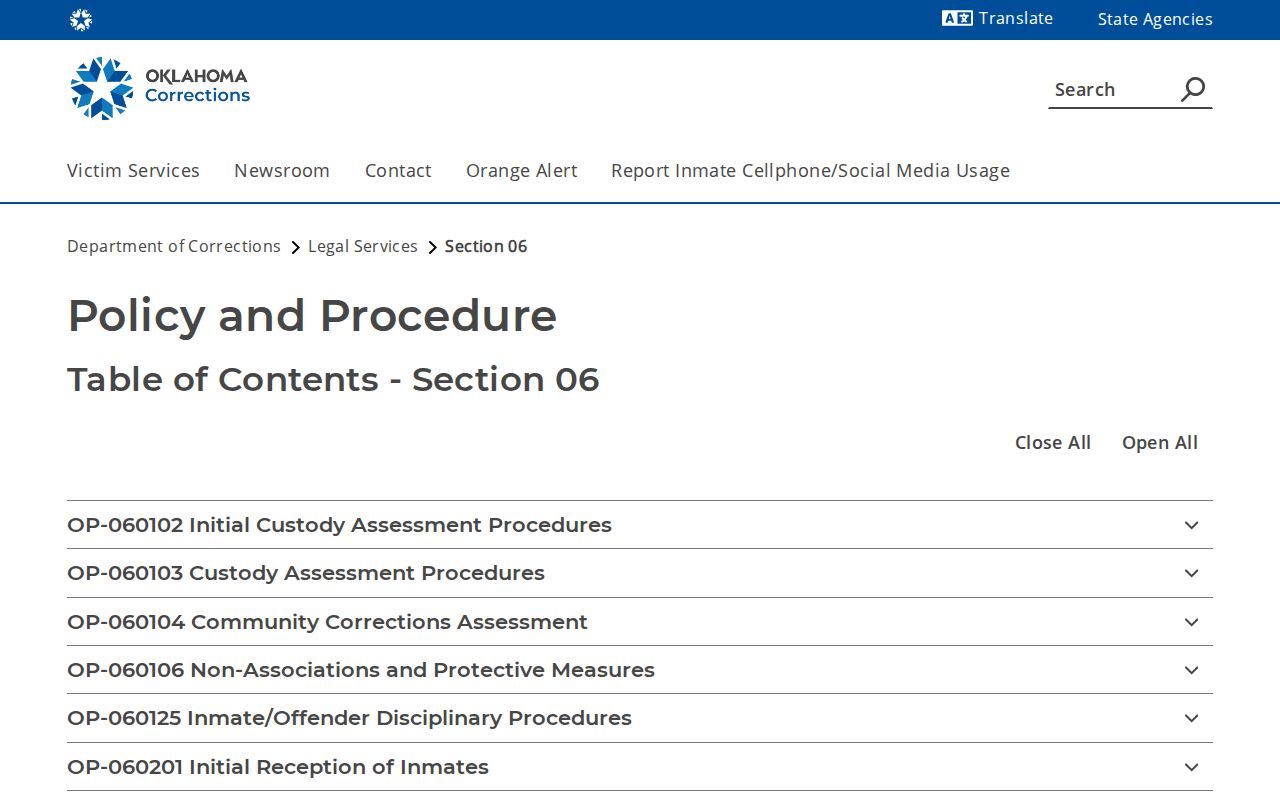
The form names help a requester seek an existing agency record instead of asking staff to create a new forecast. A Certificate of Release and a Notice of Inmate Status Change document a completed change more clearly than a public profile alone.
Note: Oklahoma state earned credits are governed by 57 O.S. §138 and §138.1, but the current agency computation controls.
Grady County 85 Percent Rule
Oklahoma’s “85% rule” is often misstated. It is chiefly a minimum-service and parole-eligibility limit for offenses placed on a statutory list. It does not promise release when 85 percent of a sentence has been served. Many listed violent or designated serious offenses require that level of service before parole eligibility. Other nonviolent cases may reach eligibility at 25 percent or one-third, depending on the offense date and governing law.
The crime date and the actual statutory list control. Key provisions include 21 O.S. §13.1 and 57 O.S. §332.7. Everyday labels such as “violent” or “nonviolent” are not enough to compute a date. Death and life-without-parole sentences are excluded from parole. A person who reaches eligibility can still be passed, denied, or subject to further action. In some violent cases, a favorable Board recommendation also requires action by the Governor. Eligibility must therefore be followed by the final decision and ODOC status.
Note: Reaching a parole threshold permits review under the governing law; it does not create a guaranteed Grady County release date.
Why Grady County Dates Change
A valid projected release date can move without the original sentence disappearing. Some changes arise from conduct and credits. Others arise from a court, another custodian, or the sequence of sentences. The agency’s current computation is stronger than an old screenshot or calendar note.
| Factor | Possible effect | Record to check |
|---|---|---|
| Credit class or achievement | Credits may accrue at a different rate or be added | ODOC sentence and credit record |
| Disciplinary action | Earned credits may be removed after process | Current ODOC computation |
| Jail credit | Accepted time may reduce time left | Judgment and consolidated record |
| Detainer or hold | One custody term may end while another agency takes custody | Release destination and receiving-agency record |
| Court or sentence change | An amendment, appeal, or consecutive term can move the date | Official Grady docket and judgment |
| Parole or commutation | Custody may end earlier, continue, or shift to supervision | PPB result, Governor action if needed, and ODOC status |
A detainer means another authority has asked the current custodian to hold or transfer the person. Thus, the end of one sentence does not always mean a return home. Ask for the manner of discharge and destination whenever another county, federal authority, or immigration custody may be involved.
Confirm a Grady County Release
For a completed ODOC event, request the Certificate of Release, DOC 060211 N, and Notice of Inmate Status Change, DOC 060211 O. Public status history, sentence information, and accepted jail credit can explain the computation. The ODOC Legal Services page provides the open-records and closed-record routes.
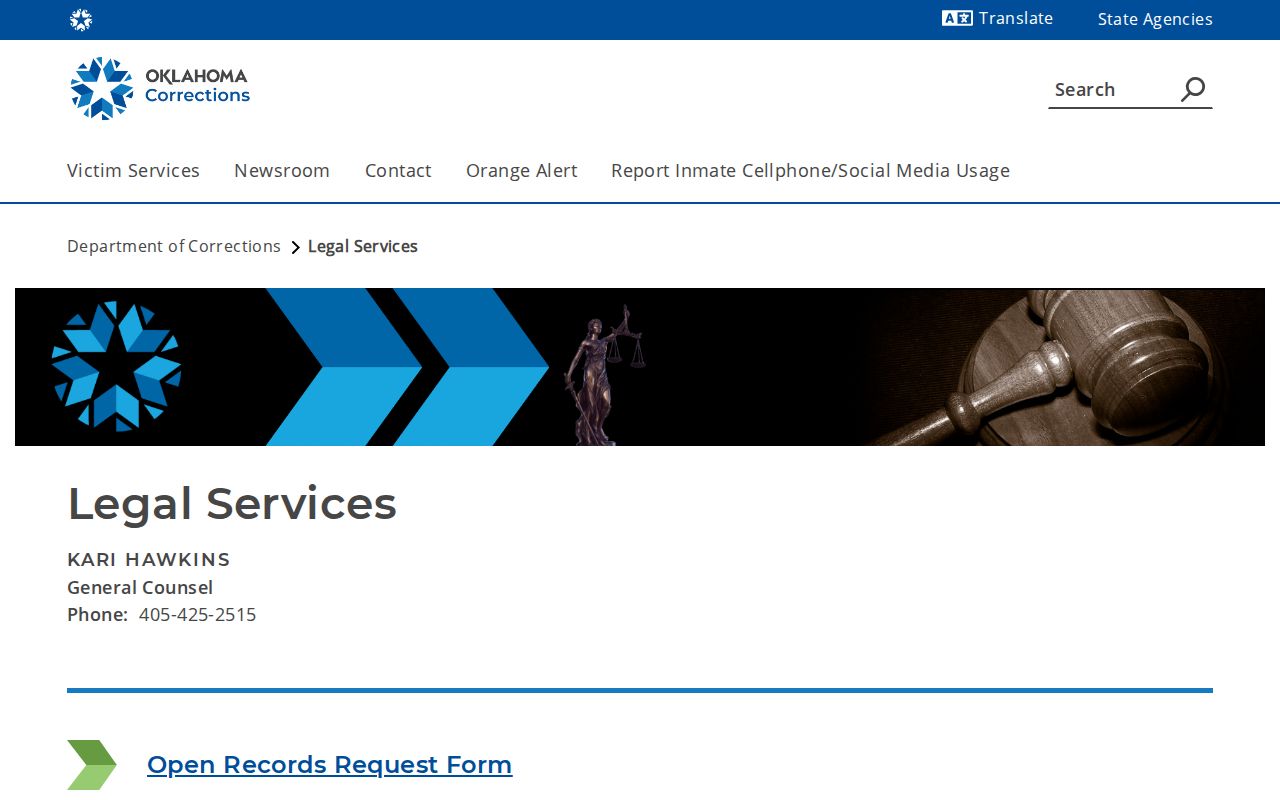
The displayed contacts separate public records from protected material and registry discharge work. A registry-discharge email should not be treated as a general personal release-date hotline. For a Grady jail event, use Sheriff Records and ask for actual date and time, manner of discharge, releasing authority, and transfer destination if kept. Oklahoma’s jail-register law makes date or manner of discharge or escape available when maintained, but it does not require a new report or promise a retention term.
A narrow request should name the person, booking or DOC number, booking range, and case number when known. For ODOC, ask for the public status history, sentence and jail-credit information, and the date institutional custody ended. Also ask whether the change led to parole, probation, full discharge, or another public disposition. For Grady County, request the jail-register discharge field and the existing release order rather than asking staff to calculate a date from scratch. The court judgment can explain the legal term, while the custodian’s record confirms how that term was applied. These records also resolve a common conflict: a person can be released by Grady yet remain active in ODOC because the county event was a transfer.
OK VINE can add a custody-change alert, though it is not the underlying release record. Registration steps and coverage limits are explained on the VINELink Release Check. Always pair an alert with the responsible jail or ODOC record when the exact release event matters.